Infinite Players Club
Infinite Players Club is a shared support organization for play clubs—independent spaces and organizers working across art, music, and technology. We raise funding from patrons and partners, help organizers develop new gathering formats, and bring them together to share production knowledge, equipment, collaborators, and opportunities. We support existing and emerging groups alike, enabling play clubs to grow and gather without consolidation. We facilitate collective ownership structures and shared resources: studios, venues, workspaces, and festival grounds that play clubs can use and have a meaningful say in running.
Dear CY,
The philosopher C. Thi Nguyen has a line I can’t shake: “The world is constantly beating the playfulness out of us, and the sheer spirit isn’t enough.” It lingers with me because I sense it’s becoming truer every day, and I suspect you do too.
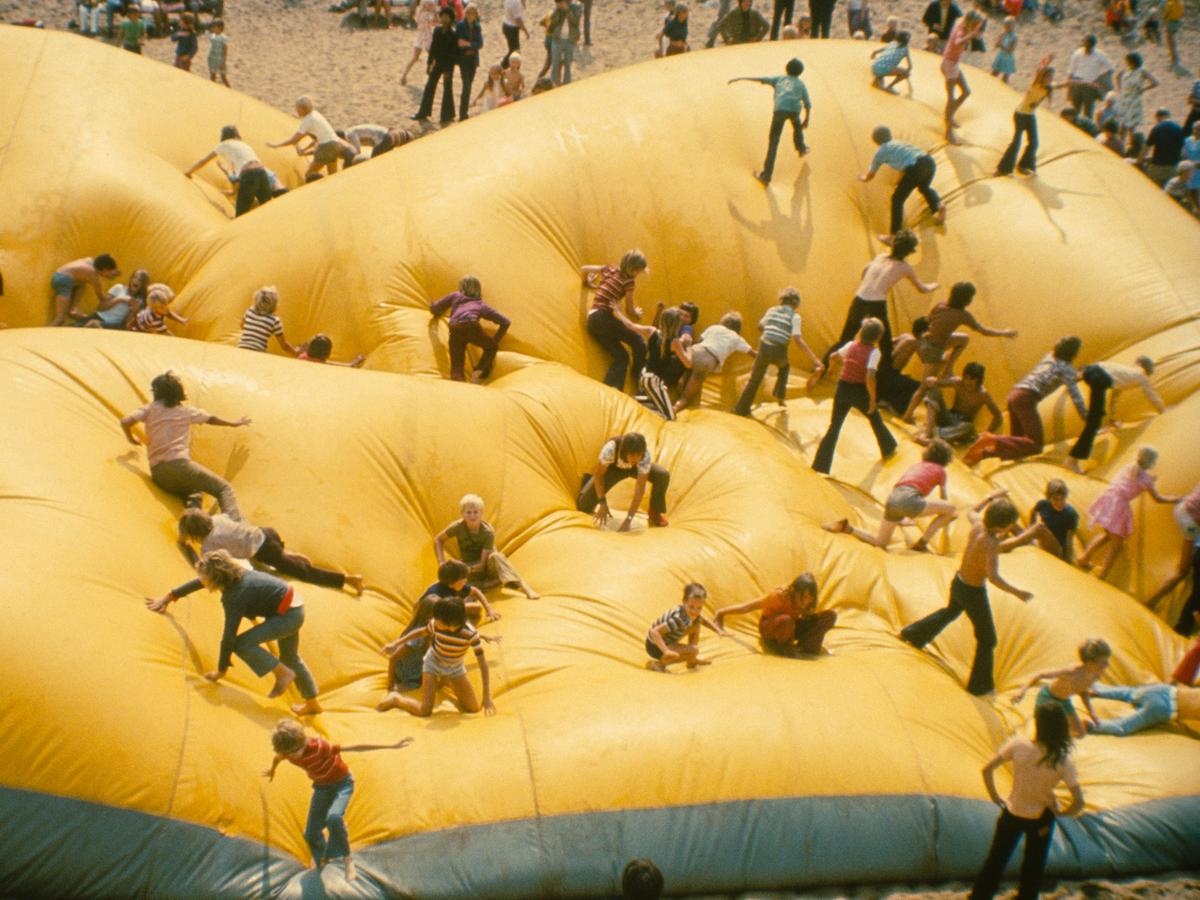
By “playfulness,” he doesn’t mean staying fun as an adult. He means the capacity to play a game without being trapped by it—to take its rules and goals seriously enough to play, while remaining free enough to question them.
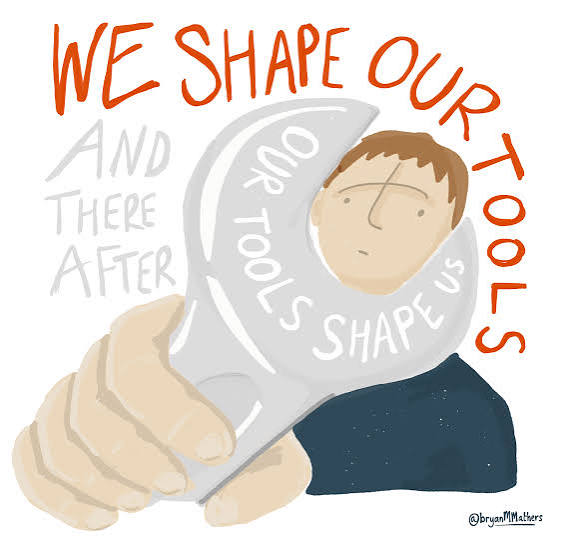
That capacity is getting harder to hold onto in a world where the technologies around us have become less like tools and more like systems that quantify and gamify our every move. We don’t use these systems so much as live inside them, and inside them we can only make the moves they reward. It’s grim. We’ve turned our tools into games that play us, and nobody’s having any fun.

To change the state of play, we need a different kind of player. To change the state of the world, we need a lot of them.
The Infinite Player
The philosopher James Carse says there are two kinds of players: finite and infinite. The finite player learns to succeed on the game’s terms: mastering its moves, climbing its ranks. The infinite player sees the rules as something to play with, not just play by. The game itself is always in play. Bending the rules and even breaking the game are in bounds, so long as a new game emerges.


Infinite and finite players do not play well together. One infinite player among a cohort of finite players is invariably labeled as the person who changed the rules and “ruined” the game. A group of infinite players together, however, is a uniquely powerful prospect. When they gather and actively shape the systems shaping them, they create new possibilities not only for themselves but for everyone around them.
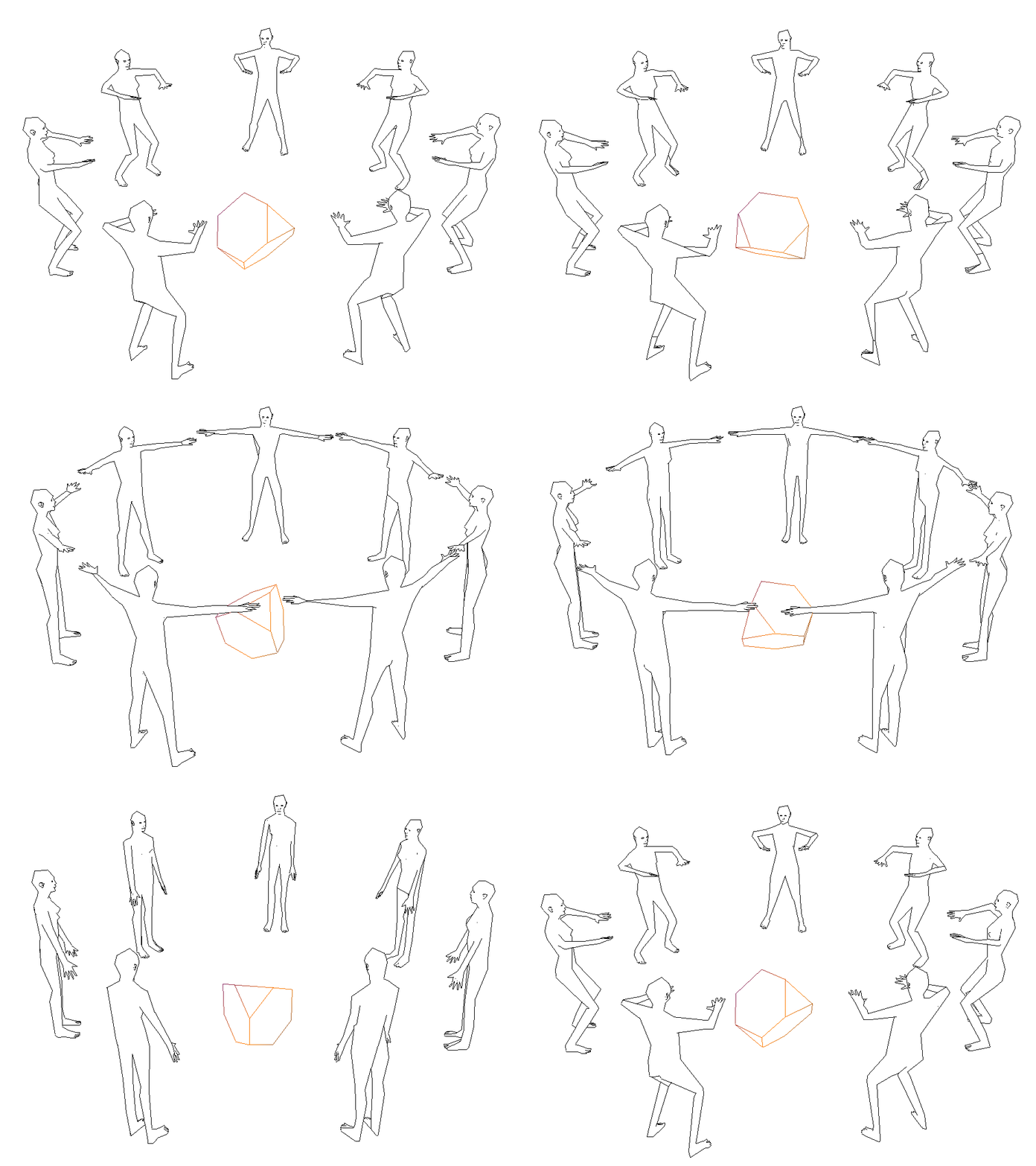
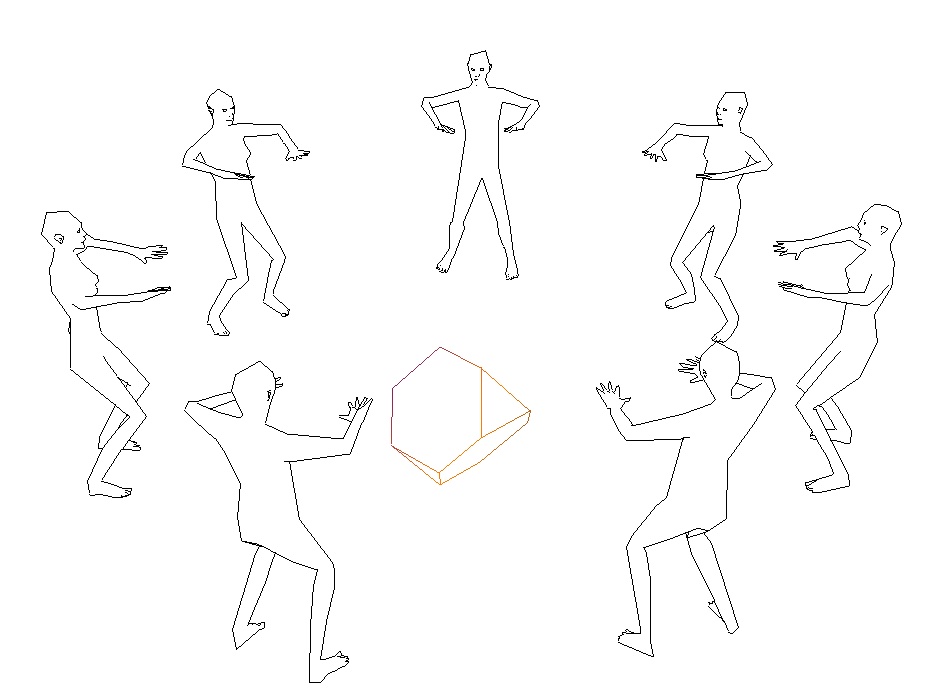
Which raises the question at the center of this project: what kinds of environments help people become infinite players?
Play clubs, of course.
Play clubs are gyms for strengthening our capacity for play. They give people repeated practice moving between playing a game and playing with the game itself: testing its boundaries, changing its constraints, and bringing other people into the process.
The Play Club
Stewart Brand captured one such club in his legendary 1972 Rolling Stone piece “SPACEWAR: Fanatic Life and Symbolic Death Among the Computer Bums,” where he outlined what happens when you put infinite players and a powerful interactive technology together inside a forgiving institutional shelter. The conditions spark a culture of cooperative experimentation that results in new games like SPACEWAR and, more importantly, in even stronger communities capable of producing more experiments. It’s a recursive phenomenon. Brian Eno coined a term for it: scenius, the genius of a scene.
Historically, scenius has emerged at the perfect nexus of space and time, in places where people are granted permission to play with those things the surrounding culture does not yet understand—places like Brand’s Stanford basement, the MIT Media Lab, Xerox PARC, Bell Labs, Warhol’s Factory, or the Outkast dungeon. Today it’s happening in a decentralized constellation of play clubs:
- Arthouse Film Lab (Los Angeles)
- Plot (Los Angeles)
- GrownKid (New York)
- Tiat (San Francisco)
- JIJI’s Jazz Co. (Los Angeles)
- Refuge Worldwide Space (Berlin)
- [[rect*]]repair (Shanghai)
- boshi’s place (New York)
- Dead Internet Theory (Los Angeles, mobile)
- LARPA (New York)
- Oracle Egg (Los Angeles)
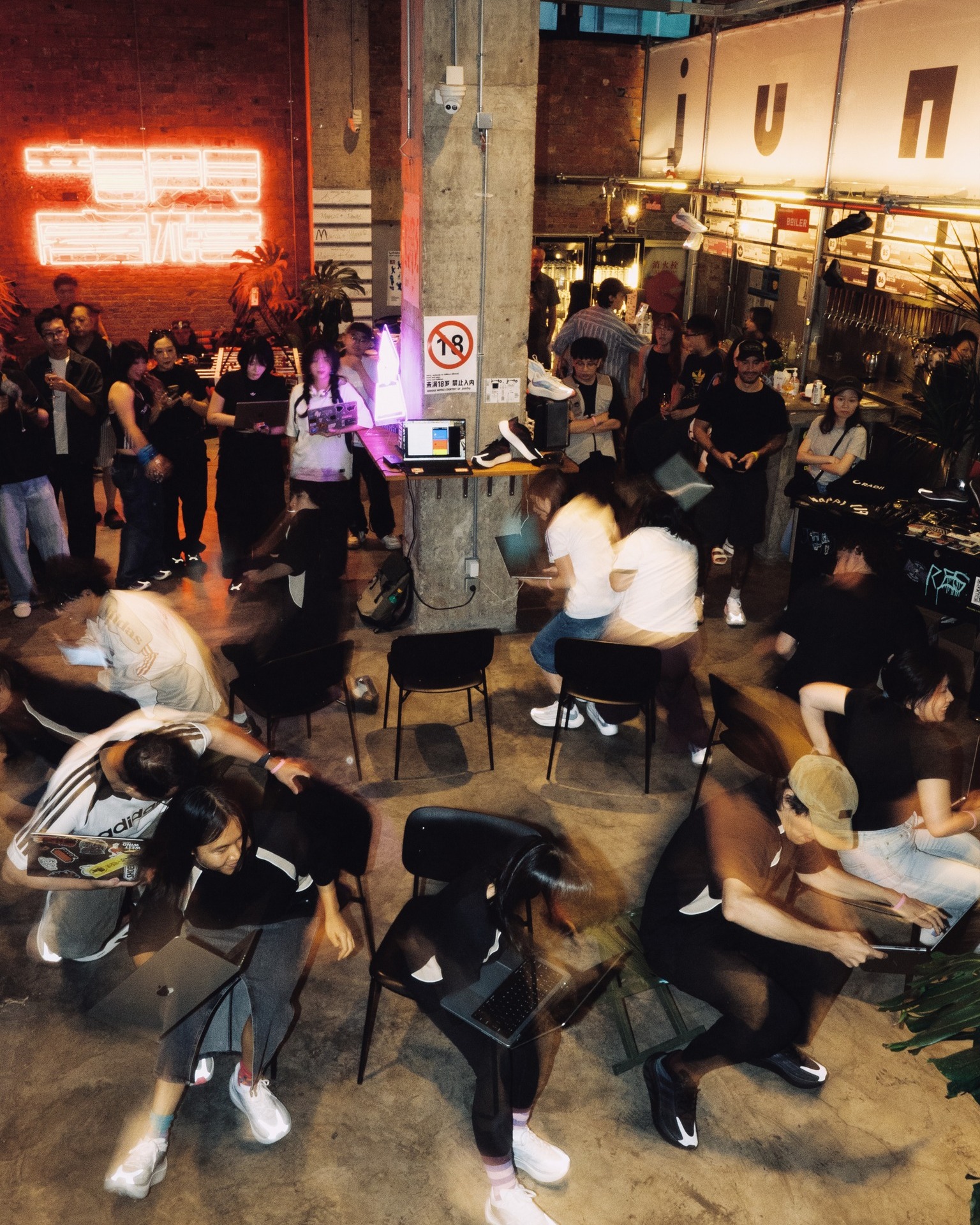
These young institutions may not look like the MIT Media Lab, but if you look closely, a pattern emerges: new architectures, rituals, and modes of playing with technology. In Shanghai, [[rect*]]repair turned vibe coding into musical chairs, transforming an ordinarily solitary interaction with AI into a collective party game.
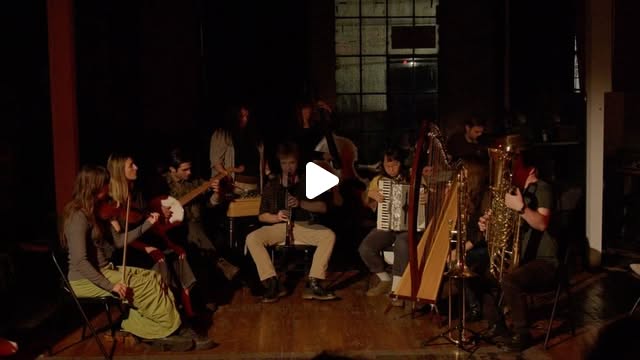
In Los Angeles, Oracle Egg’s Luck of the Draw puts ten improvisers’ names in a hat, then uses chance to assemble a quartet, trio, duo, and solo before bringing everyone together for a final set.
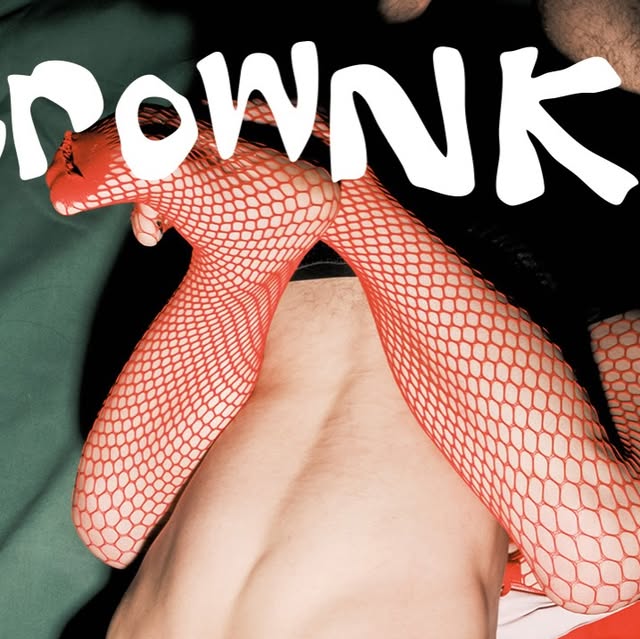
And GrownKid turned a boxing gym into Fight Your Evil Situationship, a rave where situationships entered the ring while commentators called the action—part party, part game, part ritual for practicing confrontation.
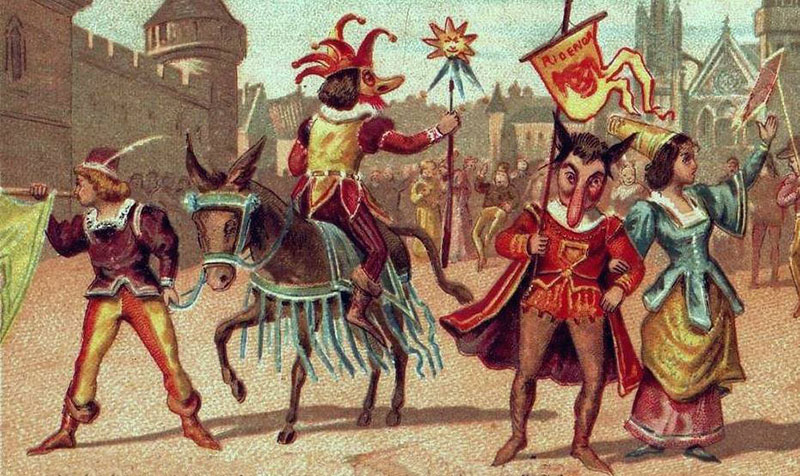
None of this looks much like what we typically call technological innovation. But the technologies that give us new ways of being together are not always new technologies. The best tool for the job might be software, but it might also be jazz. Play, after all, is the original social technology. Throughout history, in games, rituals, and carnivals, the creative inversions and rearrangements of play have driven radical social change. In medieval Europe, during celebrations like Carnival and May Day, formal hierarchies were collapsed or reversed, and commoners elected mock authorities—Lords of Misrule, Abbots of Unreason, and Boy Bishops—to subject power to public mockery.
Video games serve a similar purpose today, lending players the opportunity to temporarily inhabit and learn new forms of agency. It’s in these temporary abolitions of the ordinary world that a new world can be born.
When we combine the social technologies of play with the physical technology of tools, we create a vector to speedrun the evolution of culture. Tools invite new forms of gathering, while social practices reveal new tools, new uses, and new ways of building. It’s recursive.
Right now, our society invests heavily in physical technology—in hardware and software—while leaving social technology to ride the bench. This is intentional. Without the social affordances of collective play, tools alone cannot change the world. They can only enrich their makers.
What if we invested in both?
What if we invested in the play clubs where social technologies are already being invented—funding more experiments, helping more clubs emerge, and making what each one learns available to the rest?
That is the work of Infinite Players Club.
We are the support system for the support systems that produce infinite players. We provide play clubs with capital, shared knowledge, collaborators, equipment, partnerships, and—eventually—collectively stewarded physical assets.
Properly resourced, play clubs can be sites of active resistance to the technological status quo, spaces where groups of people reassert their autonomy and articulate their position—as players, not those being played.
In practice, Art House Film Lab shows both the promise of a play club and the pressure that can keep it from evolving. Arthouse Film Lab began as a 2,400-square-foot film lab in Chinatown. The lab gives creative people a practical reason to walk through the door: develop film, scan negatives, buy stock, and ask technical questions. But something else has formed around Arthouse. It’s a clubhouse.
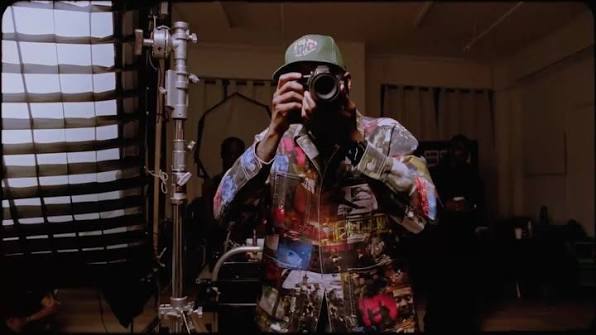
People linger. Photographers meet musicians, directors meet designers, producers meet editors. From these collisions come collaborations. People hire one another, share techniques, start projects, and occasionally create things together that none of them walked into the lab planning to make.
The problem for Sid, Arthouse’s founder, is that he doesn’t have the time to imagine what to do with this engine of connection and play. He’s busy processing film, fixing machines, answering customers, managing inventory, producing events, pitching partners, hiring staff, paying rent, and troubleshooting whatever equipment broke that morning.
We don’t want founders like Sid choosing between fixing the scanner and imagining the future. We want to see play clubs like Arthouse growing, evolving, and enduring.
Growing means not having to reinvent everything alone. Arthouse is a five-minute walk from Plot, another Chinatown club with a similar ethos, and yet the two founders have never met.
Across the network, clubs are solving variations of the same problems without the benefit of one another’s knowledge.
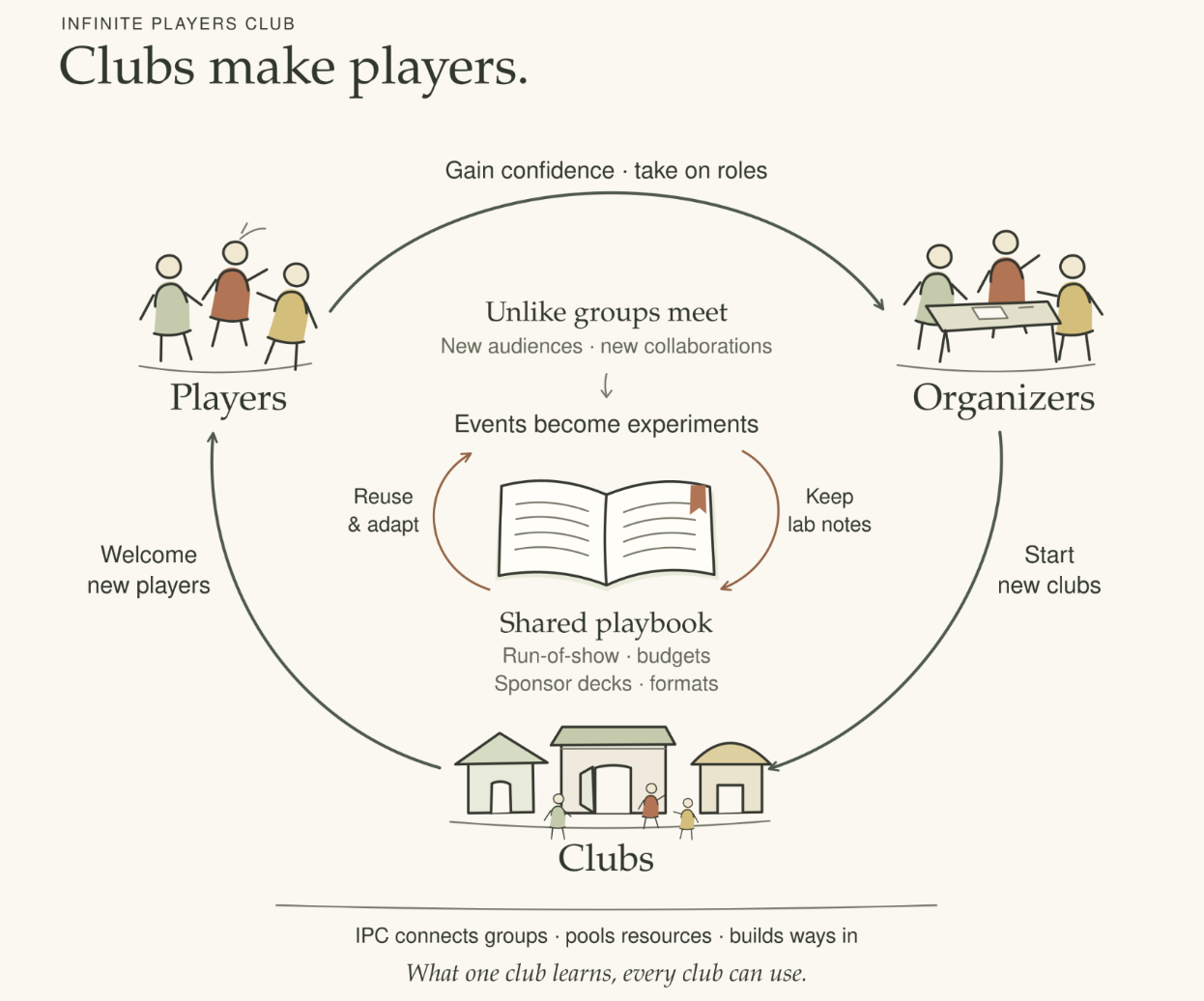
That’s where we come in. Budgets, run-of-show documents, sponsor decks, membership structures, production systems, and lessons learned become shared infrastructure.
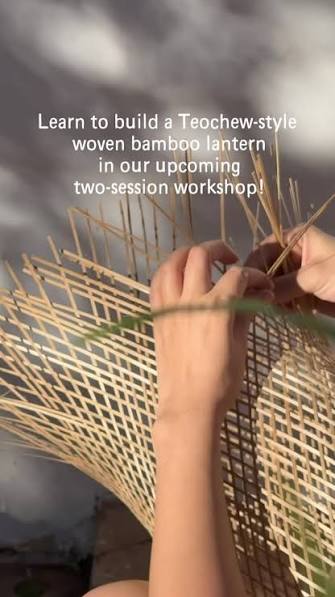
Evolving means experimenting with new gathering and media formats. Arthouse started as a film lab. From there came original productions, like the 16mm analog video series SIGNAL.

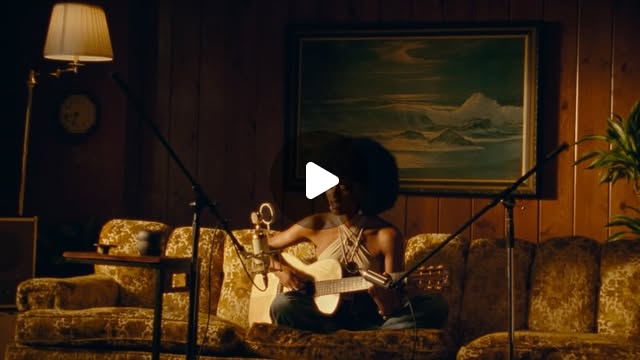
Next up is an adult Sesame Street–style show starring a puppet named Sprocket. Or a coworking space. Or a residency program. Nobody can predict where the project will go next—and that’s the point. We aren’t trying to prescribe what each club produces. We exist to protect the conditions under which new games emerge. That’s where we come in: we don’t. Or rather, we know how to discern when a club needs to experiment on its own—and when it needs resources and structure.
Enduring matters most of all. Transformation has to hold, and for that we need infrastructures to hold long enough for them to become institutions. With rising rents and economic precarity, that’s getting harder. In September 2026, Resident Advisor reported the sale of Camp Kennybrook, the longtime home of Sustain-Release festival. But what if independent festivals owned their ground together? That’s where we come in: we convene interested organizers, fund feasibility studies, and develop shared stewardship and ownership arrangements. This extends beyond festival grounds. Borrowing the organizing ambition of DAOs, we help clubs pool resources around a shared purpose while keeping local agency.
Pooling resources also means that clubs help each other level up. A format invented in Los Angeles becomes a starting point in Berlin. A sponsor structure that works for one club saves another six months of trial and error. What one club learns, every club can use. Clubs become ladders that build players’ confidence and invite them to become organizers; organizers start clubs; clubs make players. It’s a recursive phenomenon.
The Opportunity
We think this network can grow quickly because IPC happens to sit at the intersection of two ideas gaining enormous momentum at the same time.
The first is agency.
Across Silicon Valley, “agency” has become the defining virtue of the AI era.
As Andrej Karpathy puts it, “Agency > Intelligence.” As intelligence becomes abundant, he argues, agency becomes both “significantly more powerful and significantly more scarce.” Y Combinator CEO Garry Tan’s assessment is even blunter: “I want as much agency in human beings as possible.”
So do we. Empowering more humans to exert agency over the systems they inhabit is what play clubs are built to do. It’s why IPC will resonate with the people building—and profiting from—the AI transition. If you believe human agency becomes more valuable as machine intelligence becomes more capable, then creating more infinite players is a goal worth pursuing.
But AI companies and wealthy Silicon Valley patrons are only half the opportunity.
Brands are undergoing a complementary shift.
For decades, brands borrowed culture’s relevance by sponsoring celebrities, attaching themselves to scenes, and turning the resulting attention into marketing.
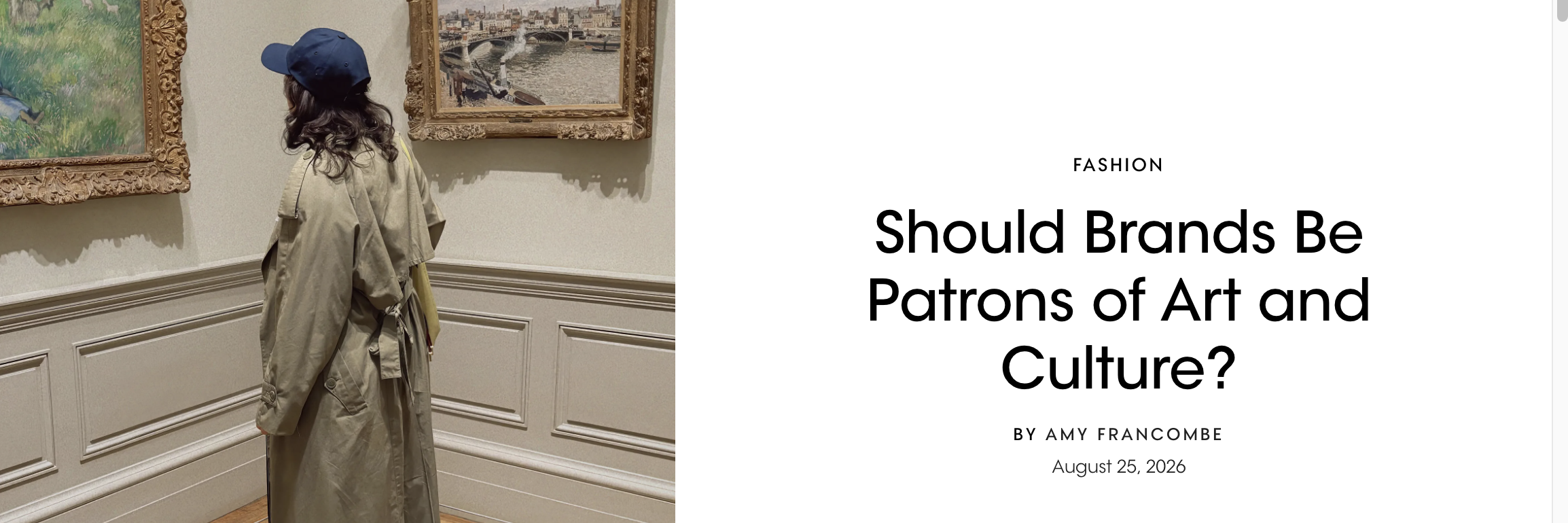
Today, as Vogue put it, brands are moving away from “trying to create culture themselves” and instead “fund[ing] the conditions upon which others do so.” Nothing is giving $10,000 directly to grassroots music collectives, funding communities and the conditions under which culture gets made.
The problem is that community does not scale like media.
Finding these groups—and then earning their trust, understanding what would actually make them stronger, and sustaining those relationships one by one—is difficult.
That’s where we come in.
Brands can build a single relationship with IPC and show up differently across the network. The same brief becomes a workshop in San Francisco, a new party format in New York, or a new social series in Los Angeles. And it works in reverse: clubs bring us the things they want to build, and we find the brands who can help make them possible. The opportunity is to give brands a way to support culture without standardizing it—and give clubs a way to turn outside resources into experiments they actually want to run.
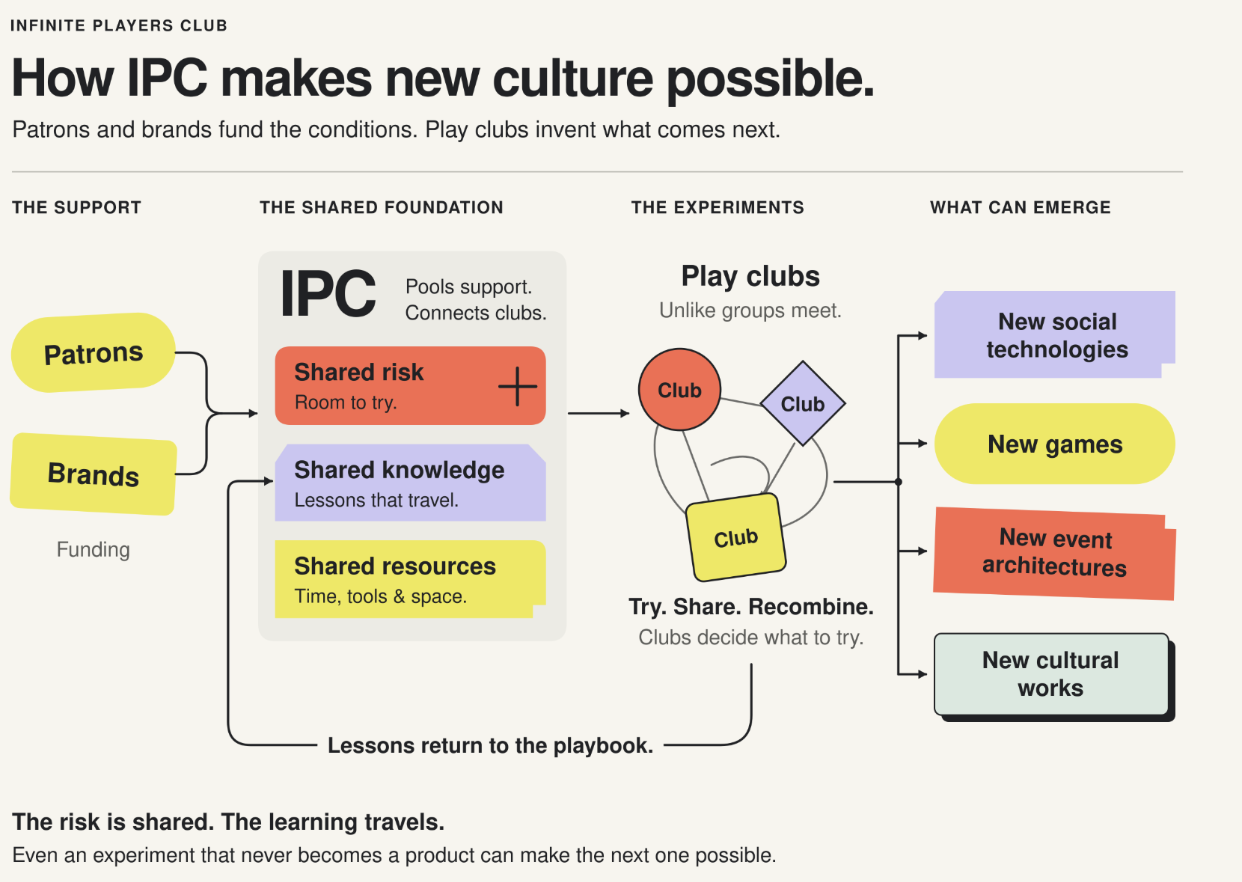
The opportunity now is to turn growing interest in agency, community, and cultural patronage into something more sustainable than a series of sponsorships.
What is missing is the connective tissue: the people who know how to find and support them, the relationships that let them learn from one another, the capital that gives them room to experiment, and eventually the infrastructure they can hold in common.
Most capital arrives after a form has proven itself.
Patronage makes it possible for a new form to emerge at all.